Slugging: Does Sleeping in Vaseline Actually Do Anything for Your Skin?
⚡ The 30-Second Version
- ✓Slugging (sealing your whole face under a layer of petroleum jelly overnight) works through the same mechanism as a sheet mask — occlusion — just maxed out for eight hours instead of fifteen minutes.
- ✓The classic dermatology study on this measured petrolatum cutting transepidermal water loss by up to ~99%, far more than mineral oil or lanolin. It doesn't form an airtight seal on top of skin; it works its way into the outer skin layer itself, which is also why it doesn't block normal barrier recovery.
- ✓Petrolatum has repeatedly tested as non-comedogenic in lab studies — but slugging still isn't a great fit for acne-prone or very oily skin, because trapping heat, sweat, and whatever's underneath it for 8 hours can worsen active breakouts even if the petrolatum itself isn't the direct cause.
- ✓Slugging is a moisture-retention trick, not a treatment — it doesn't add any active ingredient. It works best as the literal last step, over your usual routine, on dry or barrier-compromised skin.
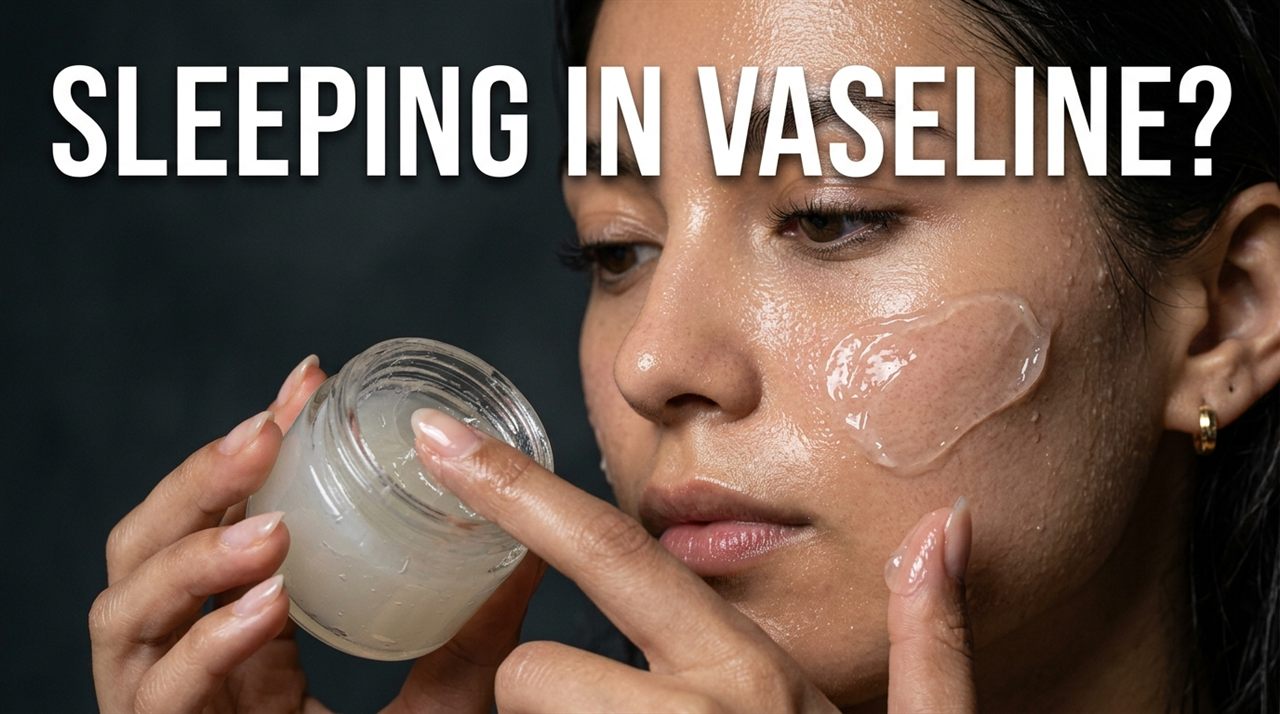
Somewhere between a beauty hack and a dare, "slugging" asks you to smear a thick, shiny layer of plain petroleum jelly over your entire face right before bed and sleep in it. It looks ridiculous. It also has a real mechanism behind it — one you may already recognize if you've ever wondered whether sheet masks actually work. Slugging is the same core trick, just pushed to its logical extreme.
The mechanism: occlusion, maxed out
The word doing all the work here is occlusion — sealing the skin's surface so the water already in it can't evaporate away. A sheet mask does this for about fifteen minutes with a wet fabric. Slugging does it for a full eight hours with an occlusive layer that doesn't dry out or lose its seal partway through the night. The result is a much longer, steadier window where your skin's moisture has nowhere to go, so it stays put instead of evaporating into your pillow.
The classic research behind this is a landmark 1992 study that measured what petrolatum actually does to skin structure and water loss. Petrolatum reduced transepidermal water loss by as much as 99% — dramatically more effective than other common occlusives like mineral oil or lanolin, which land closer to 20–30%. Interestingly, the same research found that petrolatum doesn't behave like a plastic wrap sitting on top of your skin. Instead, it works its way into the spaces between cells in the outermost skin layer, and despite that occlusion, skin underneath was still able to carry out normal barrier repair. That's a meaningfully different (and gentler) mechanism than simply suffocating the skin under an impermeable film.
What slugging is actually doing for you — and what it isn't
Because it's pure occlusion with zero active ingredients, slugging's entire job is moisture retention. It's not treating acne, not fading dark spots, not building collagen, not exfoliating — it does none of the things a serum or treatment does. What it's genuinely good at is stopping water loss overnight, which can make dry, flaky, or barrier-stressed skin look and feel noticeably better by morning: less tight, less flaky, more comfortable. It's also a smart move to layer over the top of a heavier night routine (like retinoids or acids) precisely because it seals in everything you applied underneath and can blunt some of the irritation those actives cause — though that same sealing effect is exactly why you shouldn't slug over a fresh, un-buffered strong active for the first time; you're intensifying whatever's underneath, good or bad.
Who should think twice
Here's the nuance the 15-second video skips: petrolatum itself has repeatedly tested as non-comedogenic in controlled studies — it doesn't directly clog pores the way some heavier plant oils can. But that doesn't make slugging automatically safe for everyone. If you're acne-prone or run oily, trapping heat, sweat, and whatever sebum and bacteria are already on your skin under a thick occlusive layer for eight straight hours can create a warm, humid environment that makes existing breakouts worse — even though the petrolatum isn't technically the direct cause. People with fungal-acne-prone skin often report the same thing. The honest read: slugging is a strong pick for dry, dehydrated, or barrier-damaged skin, and a riskier one for oily or actively breaking-out skin, regardless of what the comedogenicity studies say about the ingredient in isolation.
How to actually do it
Slugging is the last step of your night routine, full stop — after cleansing, after any treatments or serums, after your regular moisturizer. Apply a thin layer over your whole face (a little goes a long way; you're sealing, not drowning), avoid the eye area if it irritates you, and wash it off normally in the morning. Plain petroleum jelly is the classic, cheapest choice — it's simply refined, purified petrolatum with nothing else added, which is exactly the point. Ceramide-containing or barrier-repair balms work on the same principle with a bit more formulation polish, if you want a step up.
The bottom line: slugging works, in the narrow and specific sense that occlusion genuinely traps moisture and can noticeably help dry or compromised skin overnight — the same mechanism a sheet mask uses for fifteen minutes, just stretched across an entire night. It adds no active ingredients, does nothing for acne or pigmentation, and isn't the right move for oily or breakout-prone skin. Save it for the nights your skin actually feels dry and tight, not as a nightly non-negotiable.
Heads up: links below are affiliate links — we may earn a small commission at no extra cost to you. Learn more.
🛒 Featured in this post
 Amazon
Vaseline Petroleum Jelly Original (13 oz, 3-Pack)
The actual product slugging is built on — 100% petroleum jelly, nothing else. 20,500+ reviews and dermatologist-recommended.
 Amazon
CeraVe Healing Lip Balm with Ceramides
An occlusive lip balm with ceramides and hyaluronic acid — a smaller-scale entry point into slugging for beginners. 44,000+ reviews.
 Amazon
La Roche-Posay Cicaplast Balm B5
A derm-brand barrier-repair balm with centella asiatica and shea butter — occlusive enough for slugging, gentle enough for irritated skin. 22,000+ reviews.
📚 Sources & studies
- Ghadially R et al., Journal of the American Academy of Dermatology (1992), PMID 1564142 — Effects of Petrolatum on Stratum Corneum Structure and Function (petrolatum reduces transepidermal water loss by up to ~99%; penetrates stratum corneum interstices rather than forming an impermeable surface film) View study ↗
This article is for informational purposes only and is not medical advice. Skincare products affect individuals differently — consult a board-certified dermatologist for concerns about your skin.