What 'Clean Beauty' Actually Means (And What the Science Says)
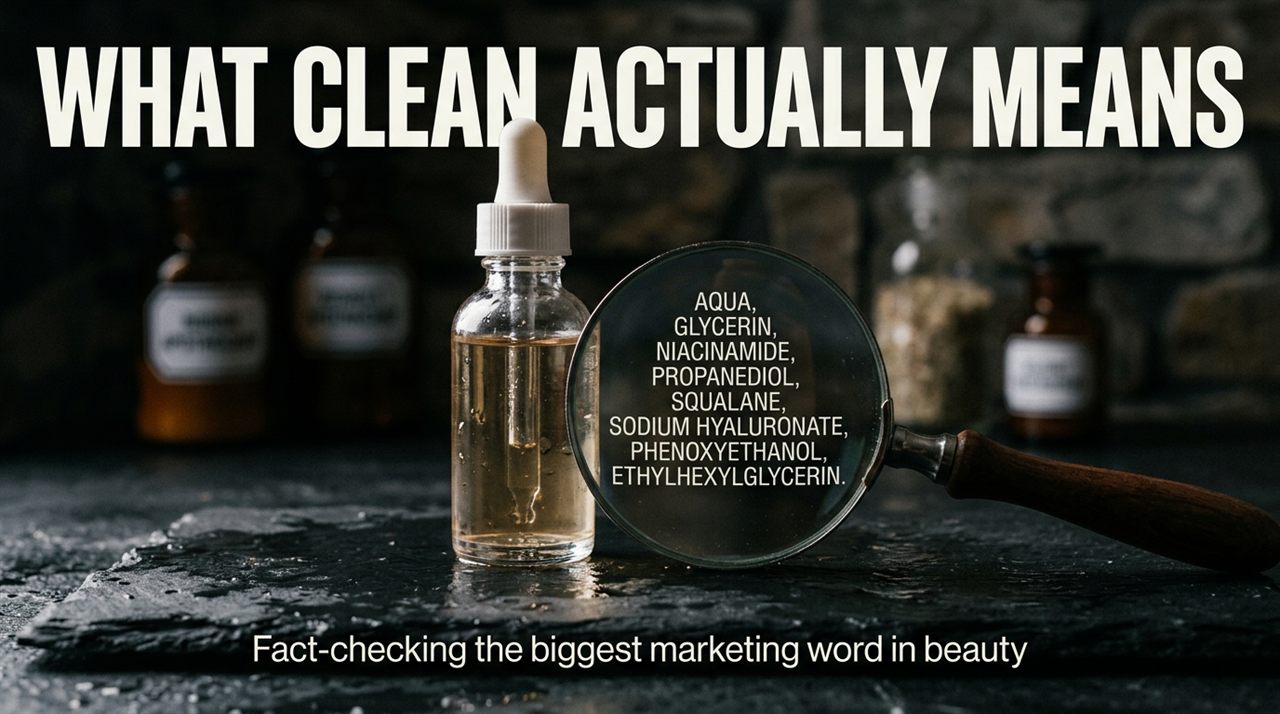
⚡ The 30-Second Version
- ✓"Clean beauty" has no legal or regulatory definition in the US — the FDA has never defined "natural," "organic," "clean," or "non-toxic" for cosmetics.
- ✓The FDA states plainly that the source of an ingredient (synthetic vs. natural) does not determine how safe it is — safety depends on the specific ingredient and formulation, not its origin category.
- ✓Dermatologists have pointed out that "natural" botanical extracts are actually common causes of contact dermatitis and photosensitization, while widely-demonized synthetic preservatives like parabens have comparatively low sensitization rates.
- ✓"Clean" isn't a scam, but it's a marketing category each brand defines for itself — check the actual ingredient list and formulation, not the label claim.
"Clean beauty" has become one of the most powerful labels in skincare marketing — brands built entirely around the term, price premiums attached to it, entire retail sections curated by it. The label implies a safety standard: clean products are safer, and by extension, everything not labeled clean is somehow less safe. That implication doesn't hold up to a basic fact-check.
There is no legal definition
The FDA has never defined "natural," "organic," "clean," or "non-toxic" for cosmetics — these are marketing terms, not regulatory categories with enforceable criteria, the way "organic" has an actual USDA certification standard for food. A 2025 scoping review in Practical Dermatology confirmed this directly, noting the terms "are not defined or enforced by any governing body, yet consumer attitudes can be heavily influenced by these labels." When a brand calls itself clean, that's a self-assigned label, not a certification you can verify against a third-party standard.
The FDA's actual position on safety
Here's the part that most directly undercuts the 'clean = safer' assumption: the FDA states plainly that the source of an ingredient does not determine how safe it is. A synthetic preservative isn't automatically more dangerous than a plant-derived one, and a plant-derived ingredient isn't automatically safer than a lab-synthesized one — safety is a property of the specific molecule, its concentration, and how it's formulated, not which broad category (natural vs. synthetic) it falls into.
Where 'natural' can actually be the riskier choice
A 2019 JAMA Dermatology editorial by University of Pennsylvania dermatologists made a pointed, evidence-based case that natural doesn't mean safe: botanical extracts — the 'natural' ingredients clean-beauty marketing often favors — are a well-documented cause of contact dermatitis and photosensitization reactions. Meanwhile parabens, one of the most demonized 'non-clean' preservative categories, have comparatively low sensitization rates in the 0.5-1.4% range in the literature the editorial cites. The editorial also flags a real historical risk on the other side of the equation: poorly preserved 'clean' products with inadequate synthetic preservation have been linked to bacterial contamination, including cases of Pseudomonas corneal ulcers — a genuine safety cost of avoiding effective synthetic preservatives.
What this means practically
None of this means 'clean' products are bad, or that synthetic is automatically better — it means the clean/synthetic axis isn't the safety signal the marketing implies it is. A well-formulated product with synthetic preservatives that actually prevent bacterial growth can be safer than a 'clean,' minimally-preserved product that spoils faster than you use it. The actual safety question is always ingredient- and formulation-specific: what's the concentration, what's the evidence on that specific molecule, is the product properly preserved — not which marketing category it's filed under.
How to actually evaluate a product
Skip the clean/non-clean label entirely and look at the ingredient list itself. Simple, well-preserved formulas from brands that disclose their actual ingredients — The Ordinary's fragrance-free, minimal-ingredient lines or CeraVe's dermatologist-developed formulas — are worth trusting because of what's actually in them and the evidence behind those specific ingredients, not because of a 'clean' badge on the front of the bottle.
The bottom line: 'clean beauty' is an unregulated marketing term, not a safety category — the FDA has never defined it, ingredient source doesn't determine safety, and 'natural' ingredients cause their own well-documented share of skin reactions. Judge a product by its actual ingredient list and formulation quality, not by whether it's labeled clean.
Heads up: links below are affiliate links — we may earn a small commission at no extra cost to you. Learn more.
🛒 Featured in this post
 Amazon
The Ordinary 100% Plant-Derived Squalane
Your skin already makes squalene. This is the shelf-stable version — a facial oil that won't clog you. 5,600+ reviews.
 Amazon
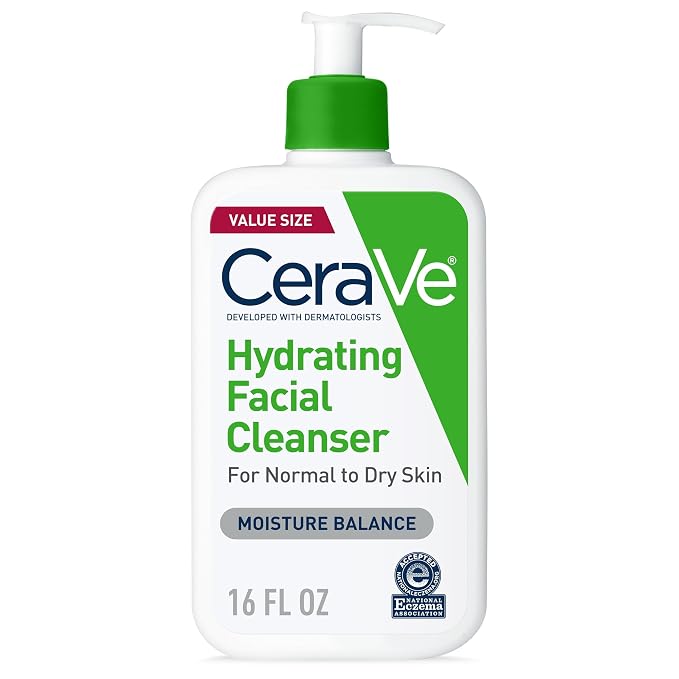
CeraVe Hydrating Facial Cleanser (16 oz)
The dry-skin sibling of our foaming favorite — cleanses without any tightness. 131,000+ reviews.
📚 Sources & studies
- U.S. Food and Drug Administration — Using Cosmetics Safely (no legal definition of natural, organic, clean, or non-toxic) View study ↗
- Rubin CB & Brod B, JAMA Dermatology (2019) — Natural Does Not Mean Safe—The Dirt on Clean Beauty Products View study ↗
This article is for informational purposes only and is not medical advice. Skincare products affect individuals differently — consult a board-certified dermatologist for concerns about your skin.